


Buccal Fat Removal in Istanbul
If you are considering buccal fat removal, you have probably already spent hours reading — and found the same recycled marketing on every clinic’s website. This is the same honest, straightforward information Dr. Sürmeli gives his own patients before surgery. No exaggeration, no pressure — just what you would want to know before making this decision.
Dr. Mehmet Sürmeli, MD, FEBOPRAS · European & Turkish Board-Certified Plastic Surgeon · Member of ISAPS & ASPS · Licensed in Türkiye, Dubai (DHA) and Abu Dhabi (DOH)
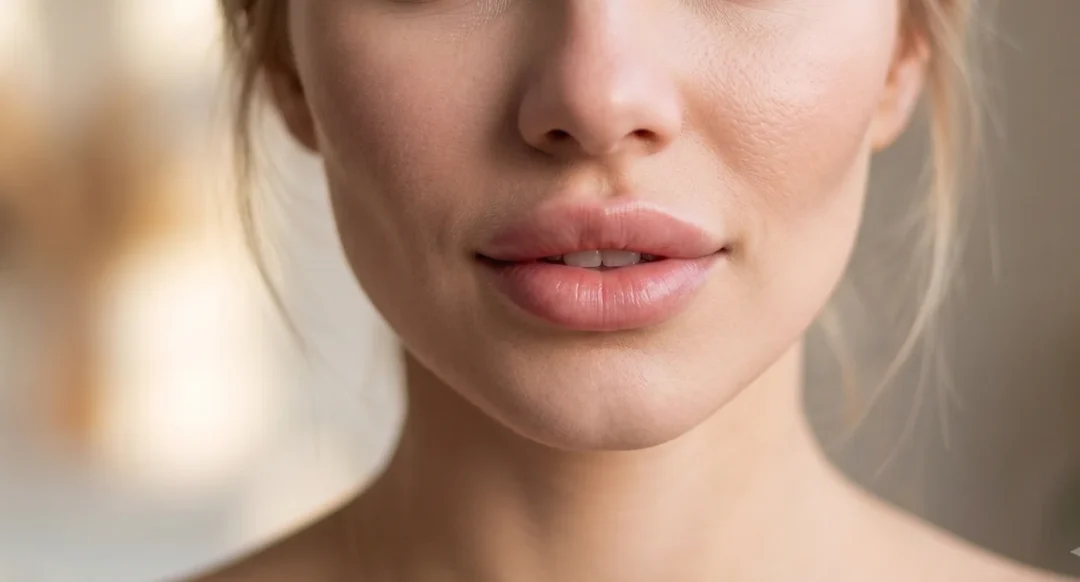
Buccal fat removal (bichectomy) in Istanbul — key facts
- Surgeon: Dr. Mehmet Sürmeli, MD, FEBOPRAS — double board certified (Turkish Board 2016, European Board 2017) — licensed as a plastic, reconstructive and aesthetic surgeon in Türkiye and the UAE (Dubai DHA, Abu Dhabi DOH) — member of ASPS, ISAPS and the Emirates Plastic Surgery Society — verified credentials
- Also called: bichectomy, cheek slimming surgery
- Incision: entirely inside the mouth, opposite the upper molars
- Anaesthesia: local (with sedation if preferred) or brief general anaesthesia — around 30 minutes for both sides
- Philosophy: conservative removal only — the pad is never taken entirely, and unsuitable candidates are declined
- Irreversible: the buccal fat pad does not grow back
What buccal fat removal actually does
Buccal fat removal — also called bichectomy — reduces the deep fat pad of the cheek to slim the lower cheek and sharpen the definition between the cheekbone and the jawline. It is performed through a small incision inside the mouth, opposite the upper molars.
It is deliberately a small operation with a very specific goal: reducing lower-cheek fullness in patients whose rounded cheeks are caused by a prominent buccal fat pad — not by skin laxity, and not by fat sitting just under the skin. Getting that distinction right is most of the decision.
The anatomy, briefly
The buccal fat pad sits deep in the mid-cheek, between the deep cheek muscle and the chewing muscle. Two structures run close to it, and respecting them is what separates a safe bichectomy from a risky one: the parotid duct, which drains saliva into the mouth, and the buccal branches of the facial nerve, which move the muscles of your mid-face and smile.
This is why the operation should be small, careful, and performed by someone who does it regularly — not because it is dramatic surgery, but because the margins around those structures are narrow.
A conservative philosophy — and why it matters
Buccal fat removal is irreversible. The pad does not regenerate, and the midface naturally loses volume and descends with age. A face that looks pleasantly slim at 30 after aggressive fat removal can look prematurely hollow at 50.
For that reason the policy here is deliberately strict: remove only the excess that presents itself with gentle pressure, never the whole pad, and decline the procedure when examination suggests the patient will not benefit in the long run. This is one of the operations where restraint at the time of surgery is the entire difference between a good and a regretted result.
Are you a good candidate?
Bichectomy tends to suit you well if you have round, full lower cheeks confirmed on examination to come from a prominent buccal fat pad, you are at a stable healthy weight, roughly 20–40 years old with good skin elasticity, a non-smoker with healthy teeth and gums, and you understand that the change is a refinement rather than a new face.
It is not the right operation if:
- Your face is naturally thin or narrow — removal would accentuate a gaunt look
- You are past roughly 45–50, or already show early midface descent — the buccal fat contributes to a youthful midface, and removing it can accelerate a hollowed appearance
- Your cheek fullness comes from skin laxity, jowls, or superficial fat — these need different treatments entirely
- You have significant weight loss planned — your face will thin on its own
- You have active dental or gum infection — the incision inside the mouth requires a healthy environment
Smoking matters. The incision heals inside the mouth, and nicotine in any form — cigarettes, vapes, IQOS — impairs that healing. Complete cessation for at least one month before and after is asked for, three months recommended.
The operation and your stay
- Anaesthesia: local with optional sedation, or brief general anaesthesia — or performed as part of another operation
- Duration: around 30 minutes for both sides
- Incision: approximately 1–1.5 cm inside the cheek, opposite the upper molars, positioned away from the parotid duct opening
- Technique: the protruding portion of the pad is delivered gently and removed symmetrically on both sides
- Closure: a few dissolving stitches — nothing to remove
- Home: the same day, if this is your only procedure
Recovery — what actually happens
| WHEN | WHAT TO EXPECT |
|---|---|
| First 2–3 days | Cheek swelling — often more than patients expect — and mild discomfort; soft, lukewarm foods |
| Week 1 | Swelling begins to subside; mouth rinses and careful oral hygiene; back to desk work for most |
| Weeks 2–4 | Social swelling largely resolved; normal diet resumes |
| 2–3 months | Contour becomes visible as deep swelling settles |
| 6 months | Final result — the slimming appears gradually, not overnight |
Patients expecting an immediate change are often surprised: for the first weeks the cheeks look fuller, not slimmer, because of swelling. The real result reveals itself slowly.
Patient safety comes first — always
Surgery is performed in properly equipped facilities, and case selection is deliberately conservative. If your cheek fullness is not caused by the buccal fat pad, or if your facial structure suggests you will regret the change in twenty years, you will be told that honestly. Declining an unsuitable bichectomy is part of the service.
Ready to talk it through?
Send your questions and photographs for an assessment. Dr. Sürmeli will tell you plainly whether your cheek fullness comes from the buccal fat pad — and whether removing it is genuinely in your interest.
Buccal Fat Removal FAQ
Will I have a scar on my face?
The incision is made inside the mouth, opposite the upper molars, so it does not sit on the skin of the face. Every incision heals with a scar; this one lies on the inner lining of the cheek.
Does the fat come back?
No — and this cuts both ways. The buccal fat pad does not regenerate, which is why the result is permanent and why the removal must be conservative. It cannot be undone.
Will it give me sharp, model-like cheekbones?
It refines the lower cheek and improves the definition between cheekbone and jawline. It is a subtle change, not a transformation, and anyone promising a dramatically new face from this operation is overselling it.
Will it make me look older later?
It can, if too much is removed — which is precisely why the approach here is conservative and why some patients are declined. The midface loses volume naturally with age; over-removal accelerates that.
Can it be combined with other procedures?
Yes, and often is — with a lip lift, upper eyelid surgery or rhinoplasty, for example. Combining is discussed at consultation based on what you actually need.
Traveling from abroad? This is routine for us
A large part of this practice is international — particularly patients from the United States, United Kingdom and Europe. Buccal fat removal is a short procedure and often an outpatient one, so the stay is brief: plan on about 7 days in Istanbul so the early healing inside the mouth can be checked before you fly, particularly if it is combined with another procedure. Our patient packages cover 4★/5★ hotel options, airport and clinic transfers, support throughout your stay and your medications. Beyond Istanbul, Dr. Sürmeli also holds medical licences in Abu Dhabi and Dubai — for details about UAE consultations, please contact our patient representatives.
For patients from the UAE & the Gulf
Dr. Sürmeli is licensed by the Dubai Health Authority (DHA) and the Abu Dhabi Department of Health (DOH) — and periodically practices in the UAE, though in-person dates there are occasional and not arranged in advance. Start with a free photo pre-evaluation, followed by an online evaluation by Dr. Sürmeli or a consultation in the UAE, and have your surgery in Istanbul. Read the full guide for UAE & Gulf patients →

 Türkçe
 العربية
 Русский
 Deutsch
 Español
 Français
 Italiano