


Breast Reduction in Istanbul
If you are considering a breast reduction, you have probably already spent hours reading — and found the same recycled marketing on every clinic’s website. This is the same honest, straightforward information Dr. Sürmeli gives his own patients before surgery. No exaggeration, no pressure — just what you would want to know before making this decision.
Dr. Mehmet Sürmeli, MD, FEBOPRAS · European & Turkish Board-Certified Plastic Surgeon · Member of ISAPS & ASPS · Licensed in Türkiye, Dubai (DHA) and Abu Dhabi (DOH)
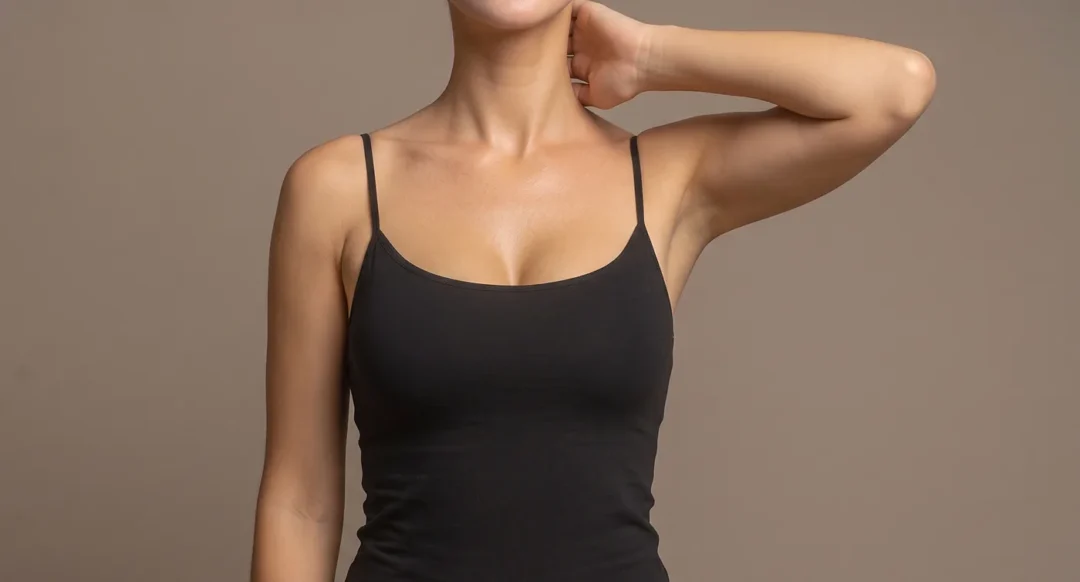
Breast reduction in Istanbul — key facts
- Surgeon: Dr. Mehmet Sürmeli, MD, FEBOPRAS — double board certified (Turkish Board 2016, European Board 2017) — licensed as a plastic, reconstructive and aesthetic surgeon in Türkiye and the UAE (Dubai DHA, Abu Dhabi DOH) — member of ASPS, ISAPS and the Emirates Plastic Surgery Society — verified credentials
- Experience: more than 600 breast operations — reduction, lift, augmentation and revision surgery
- Technique: superomedial pedicle with an inverted-T (Wise pattern) scar — chosen for reliable blood supply and preserved nipple sensation
- Anaesthesia & stay: general anaesthesia, 1–2 nights in a fully equipped hospital
- Also relieves: neck, shoulder and back pain, bra-strap grooving, and skin irritation beneath the breast
- International patients: 6–7 day stay in Istanbul, structured remote follow-up after departure
Why women choose breast reduction
Breast reduction is one of the most reliably satisfying operations in plastic surgery, and the reason is simple: it relieves symptoms that patients have often lived with for years. Unlike a breast lift, which repositions the same volume of tissue, a reduction genuinely decreases breast volume — so it is both a functional and an aesthetic operation.
The weight of very large breasts places a continuous load on the neck, shoulders and back. The pattern is familiar to anyone living with it:
- Neck, shoulder and upper-back pain, and postural changes from carrying the weight forward
- Bra-strap grooving — painful indentations where the straps dig into the shoulders
- Skin irritation, rashes and recurrent infections in the fold beneath the breast, especially in warm weather
- Difficulty with exercise and physical activity, and disturbed sleep
- Self-consciousness, difficulty finding clothing that fits, and reduced confidence
Relief from these symptoms is usually rapid and lasting. Most patients say the physical comfort matters as much as the change in appearance.
When breast size affects health
Very large breasts are described with two overlapping terms. There is no single agreed definition, and the decision to operate is based on your symptoms and proportions — not on a number.
Macromastia means breasts large enough to cause physical symptoms. In these cases a reduction commonly removes somewhere in the region of 300–1,000 grams of tissue per breast. Gigantomastia is the most severe form, generally described as breast tissue exceeding about 3% of total body weight.
The technique matters: superomedial pedicle
For breast reduction Dr. Sürmeli uses the superomedial pedicle technique. In plain terms, the “pedicle” is the bridge of tissue left attached to the nipple that carries its blood supply and nerves while the breast is reshaped around it. Choosing it well is what protects the nipple.
The superomedial pedicle draws its blood supply from the internal mammary artery, which gives:
- A reliable, robust blood supply to the nipple-areola complex
- Preserved nipple sensation in the majority of patients
- Good long-term nipple position and breast shape
- Enough tissue to reshape the upper part of the breast properly
About the scars — honestly
A breast reduction cannot be done without scars, and any clinic suggesting otherwise is not being straight with you. The standard approach is the inverted-T (Wise pattern), which creates three scars:
- Around the areola — hidden at the natural colour transition
- A vertical line from the areola down to the breast fold — this faces downward and is not visible in most positions
- A horizontal line along the fold beneath the breast — hidden in the natural crease
Scars mature over roughly 12–18 months, fading from pink to pale. Most patients consider them a fair exchange for the relief and shape they gain. Dr. Sürmeli would rather you understand this clearly before surgery than be surprised afterwards.
Are you a good candidate?
A breast reduction tends to suit you well if you have completed your pregnancies or do not plan future ones, are at or near a stable weight, and have realistic expectations about scarring and shape.
It is not the right operation — or not the right time — if you are planning pregnancy in the near future, have poorly controlled diabetes or other significant medical conditions, or expect a single operation to produce a flawless result with no possibility of refinement.
Smoking matters more here than almost anywhere else. Nicotine in any form — cigarettes, vapes, IQOS — constricts the small vessels this operation depends on and sharply raises the risk of healing problems and nipple complications. Dr. Sürmeli asks for complete cessation for at least one month before and after surgery, and recommends three. This is not a formality; it is the single change that most improves your safety.
The operation and your stay
- Anaesthesia: general — you sleep through it
- Duration: approximately 2.5–3.5 hours
- Hospital stay: 1–2 nights in a fully equipped hospital
- Before surgery: a breast ultrasound as a baseline, and blood work — anaemia is corrected first, because it affects healing
Recovery — what actually happens
| WHEN | WHAT TO EXPECT |
|---|---|
| First 2–3 days | Soreness and tightness rather than sharp pain; walking encouraged; supportive bra day and night |
| Week 1 | Most patients are up and social; many notice the neck and shoulder relief almost immediately |
| Weeks 2–6 | Discomfort fades; supportive bra continues; no underwire; light lower-body exercise from week 2–3 |
| Weeks 6–8 | Upper-body exercise returns |
| 3–6 months | Swelling settles and the final shape emerges |
| 12–18 months | Scars continue to fade and flatten |
Traveling from abroad? This is routine for us
A large share of Dr. Sürmeli’s patients travel to Istanbul for surgery. Plan on a 6–7 day stay — the most important week of your recovery, spent where your surgeon can see you. Follow-up continues remotely after you return home, for as long as you need it.
Patient safety comes first — always
Surgery is performed in a fully equipped hospital, never in an office setting. Case selection is careful: if a reduction is not in your interest, or if the timing is wrong, you will hear that honestly. Turning down an operation is part of the service.
Ready to talk it through?
Send your questions and photographs for an assessment, and Dr. Sürmeli will tell you plainly whether a breast reduction is the right operation for you — and what it can and cannot achieve.
Breast Reduction FAQ
Will a breast reduction relieve my back and shoulder pain?
For most patients with symptomatic macromastia, yes — and often quickly. Relieving the mechanical load is precisely what the operation is designed to do, and symptom relief is usually one of the most durable results.
Will I still be able to breastfeed?
The superomedial pedicle preserves a substantial portion of the breast tissue and its connection to the nipple, and many patients do breastfeed afterwards — but it cannot be guaranteed by any breast reduction technique. If future breastfeeding matters to you, say so at consultation; it affects planning and timing.
Will I lose nipple sensation?
Sensation is preserved in the majority of patients with this technique. Temporary altered sensation in the early months is common and usually settles. Permanent change is possible but uncommon.
How visible will the scars be?
There will be permanent scars — around the areola, vertically down to the fold, and along the fold itself. They are positioned to sit in natural creases and colour transitions, and they fade substantially over 12–18 months.
How much smaller will I be?
That is planned individually from your measurements, symptoms and goals — not from a cup size promised in advance. Cup sizing varies so much between manufacturers that it is an unreliable way to plan an operation.
For patients from the UAE & the Gulf
Dr. Sürmeli is licensed by the Dubai Health Authority (DHA) and the Abu Dhabi Department of Health (DOH) — and periodically practices in the UAE, though in-person dates there are occasional and not arranged in advance. Start with a free photo pre-evaluation, followed by an online evaluation by Dr. Sürmeli or a consultation in the UAE, and have your surgery in Istanbul. Read the full guide for UAE & Gulf patients →

 Türkçe
 العربية
 Русский
 Deutsch
 Español
 Français
 Italiano